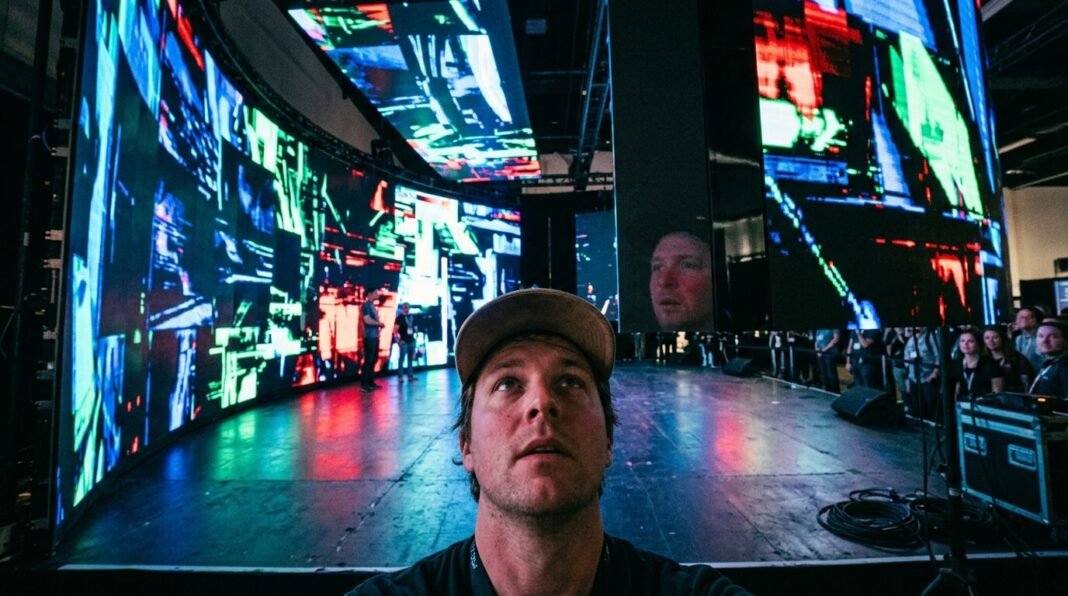
Okay y’all, so I’m sitting here in my messy apartment in Los Angeles right now, AC blasting because it’s like 85 degrees outside even though it’s supposed to be spring, empty Taco Bell wrappers everywhere, and I gotta be real with you: the volume tech just flipped the whole filmmaking game upside down. Like, seriously, I thought green screens were gonna be around forever – you know, that classic “stand in front of nothing and pretend” method that made so many blockbusters look kinda janky in post. But nah, this LED wall monster called the volume (or StageCraft if you’re fancy) is straight-up trying to be the end of green screens, and it’s making movie budgets explode in ways that have me laughing and crying at the same time.
I remember last summer, me and my buddy tried to shoot this dumb short film in my garage using nothing but a cheap green sheet from Amazon. The lighting was all wrong, my actor’s shirt had this weird spill that made him look like a floating head in editing, and we spent like three weekends fixing it in DaVinci. Total nightmare. Fast forward to hearing about how The Mandalorian shot half its stuff inside this giant curved LED stage – no more green hell, real reflections on the armor, actors actually seeing the damn desert instead of imagining it. Sounded amazing. But then I dug deeper and realized the volume tech ain’t exactly cheap. Those setups cost millions upfront, and suddenly Hollywood budgets are ballooning because everyone’s rushing to build their own virtual production stages.
Why I Thought The Volume Tech Would Save Indie Filmmakers (Spoiler: It Didn’t For Me)
Look, as a regular dude who’s not some big-shot producer – just a guy who loves movies and occasionally pretends he can make them – I got super hyped about the volume tech being the end of green screens. No more actors squinting at tennis balls on sticks. No more weeks of roto work in post because the keying sucked. The lighting wraps around everything naturally, Unreal Engine spits out real-time environments, and boom, you get in-camera VFX that actually look good on set.
But here’s my flawed American take: I tried renting time on a small micro-volume stage last fall for a test shoot. Drove two hours in traffic, nerves shot, spilled coffee on my jeans like an idiot. The tech was cool as hell – we flipped from a rainy alley to a sunny beach in seconds. Actors performed way better because they could react to the actual background. Yet the rental fees plus the VFX artists needed to prep all those 3D assets? My little budget got absolutely wrecked. Turns out virtual production with LED walls shifts costs upfront hard, and if you’re not Disney, it can make things pricier overall.
- Pros I personally felt: Better actor immersion, realistic reflections (Mando’s helmet never looked fake), faster shooting days sometimes.
- Cons that bit me: Specialized crew required, content creation eats time and money early, and if the LED moiré or tracking glitches? Back to square one anyway.
Anyway, I left that studio feeling both amazed and broke, eating gas station snacks on the drive home while questioning all my life choices.
The Budget Explosion No One Warned Me About With The Volume Tech
Here’s where it gets chaotic – and this is me being raw honest. Everyone says the volume is gonna cut post-production costs and kill green screens forever. And yeah, for big productions like The Batman or House of the Dragon, it kinda does. You capture final pixels in camera, lighting is baked in, no more fixing spill on hair for days.
But movie budgets are exploding because building these massive LED stages, powering them, calibrating the tracking cameras, and paying the game engine wizards isn’t free. ILM’s original Mandalorian Volume reportedly ran over $100 million in tech. Smaller stages still run millions to set up. Studios are throwing cash at custom environments that look photoreal, and suddenly what was supposed to save money is inflating line items everywhere. I saw this firsthand when a friend worked on a mid-tier streaming show – they bragged about ditching green screens, but the budget report later showed virtual production costs had doubled their VFX allocation. Oops.
I mean, I’m all for innovation, but as an American who’s watched ticket prices and subscription fees climb while Hollywood complains about costs, it’s kinda contradictory. The volume tech gives directors god-like control – change the sky mid-take! – but it also means more pre-production perfectionism that racks up bills.
My Embarrassing Learning Curve With Virtual Production LED Walls
Not gonna lie, I messed up bad trying to understand this. Thought I could just “learn Unreal Engine real quick” for my next project. Spent a weekend in my living room (fan blowing papers everywhere, neighbor’s dog barking) watching tutorials, only to realize rendering those huge environments for a proper volume stage needs serious GPU power I don’t have. My laptop sounded like a jet engine and still lagged.
Surprising reaction? The sensory part blew my mind. Standing inside even a demo volume, the light hitting your face from the walls feels so real it messes with your brain. No more staring at chroma key green that makes everyone look sick. But then the tech fails – one flicker and the whole illusion breaks. It’s exhilarating and frustrating at once.
If you’re like me, starting small: Test with hybrid setups. Use the volume for key establishing shots and green screen for the wild stuff that needs post flexibility. Don’t blow your whole budget on one shiny LED wall like I almost did in my daydreams.
Outward links for credibility: Check out ILM’s StageCraft details here or deeper dives on virtual production pros/cons from folks who actually build these things.
The post is kinda devolving now because I’m realizing halfway through that I both love and hate the volume tech – it’s ending green screens in the best way for immersion but exploding budgets so only the big players win sometimes. My opinions flip depending on whether I’m watching a gorgeous Mandalorian episode or staring at my own failed short film renders at 2 AM.
Wrapping This Ramble: My Genuine Take on The Volume Tech Future
Look, from my couch in the US right now, surrounded by half-finished scripts and empty energy drink cans, the volume tech is a massive step toward better filmmaking. It can reduce location shoots, give actors real environments to play in, and create stuff that would’ve been impossible or way more expensive before. But it’s not magically fixing budgets – in many cases, it’s shifting and sometimes inflating them.
If you’re a filmmaker, my flawed advice: Start with education, not a full stage rental. Experiment small, mix with traditional methods, and don’t chase the hype without running the numbers. For everyone else, next time you watch something mind-blowing with perfect lighting, maybe tip your hat to the LED walls instead of just the CGI team.
What do you think – is the volume really the end of green screens, or just another expensive toy? Drop a comment, share your own embarrassing production stories, or hit me up if you wanna chat more about this over virtual tacos. This tech is wild, but so is Hollywood. Let’s see where it goes without bankrupting us all. Peace.